
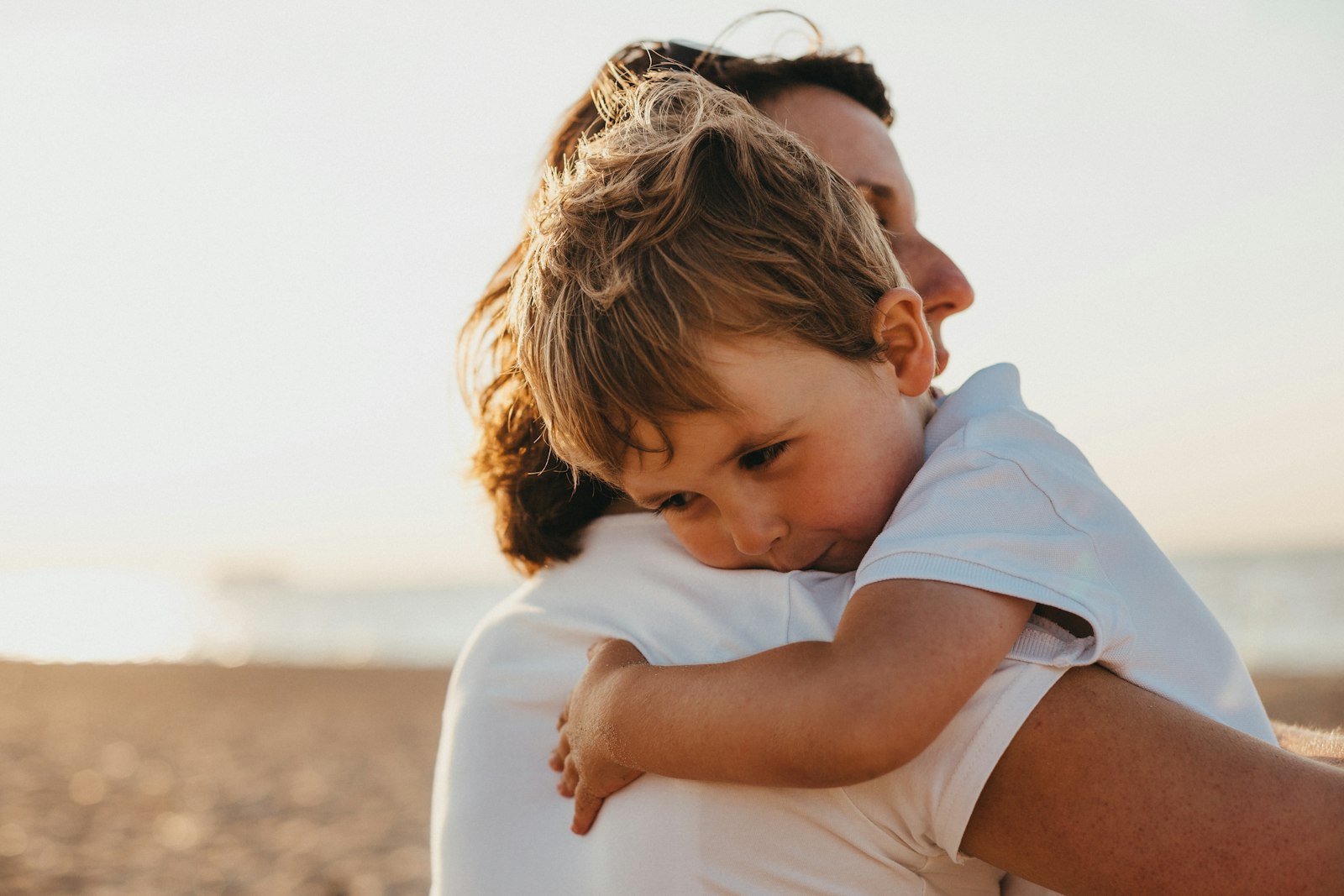
Every so often in my Grape Jammers class, a little one bursts into tears because the drum basket goes back on the shelf before they are finished. Their whole body goes stiff, and the crying gets louder every time a grown-up explains that it is time for the next song. I have seen that moment more times than I can count, and it is one of the most normal things a two-year-old can do.
Parents sometimes ask me how to stop moments like that. The honest answer is that we can’t stop them, and we don’t need to. What we can do is help a toddler slowly build the skill of coming back to calm. That skill is called self-regulation, and toddler self-regulation grows in small, very ordinary ways.
What Toddler Self-Regulation Really Means
Self-regulation is the ability to manage feelings, attention and behavior, like waiting your turn, calming down after a disappointment or stopping when someone says stop. It is a skill, not a personality trait, and the parts of the brain that support it keep developing well into the twenties. A toddler is at the very beginning of that road.
That is why a two-year-old can be flooded by a feeling that seems small to us. They don’t have the tools yet to slow it down on their own. The good news is that the tools can be learned, and young children learn them mostly by borrowing ours.
QUICK SCIENCE: In a well-known study that followed about 1,000 children in New Zealand from birth to age 32, children with more self-control grew into adults with better health, more financial stability and fewer criminal convictions, even after accounting for intelligence and family background (Moffitt et al., 2011). The researchers found the effect along a gradient rather than a cut-off, which means small improvements mattered. Self-control is something children build over time, and everyday practice in the early years is part of that.
What Self-Regulation Looks Like at Each Age
Babies: regulation is almost entirely borrowed. A baby calms when they are held, rocked, fed or sung to, and every time that happens they are learning that big feelings pass.
Toddlers, 1 to 3: feelings are huge and arrive fast. A toddler can start to wait a few seconds, follow a simple stop-and-go game and accept comfort, but they still need an adult to help them through most big moments.
Preschoolers, 3 to 5 and up: this is when many children start using words and small strategies on their own, like taking a breath, hugging a stuffed animal or telling you they are mad instead of showing you. You will still be their calm for a long time, and that is how it should be.
Co-Regulation Comes First
Before a toddler can calm themselves, they need someone to calm down with. This is called co-regulation, and it is mostly about your presence rather than your words. When you stay steady, your child’s body slowly takes its cue from yours.
Get low and close. Kneel to their level. A calm adult body nearby is more soothing than anything you can say.
Name the feeling. Keep it short: “You’re mad. You wanted more drum time.” Naming a feeling helps a toddler start to recognize it the next time.
Wait it out. A big feeling has a beginning, a middle and an end. Long explanations in the middle rarely land, so save the talking for after.
Then move on together. Once the storm passes, offer a small next step: “Let’s go find the shakers.” Moving on without a lecture tells them the feeling was okay.
This connects to something I wrote about in why waiting is a superpower: children learn to wait and to cope when they trust that the adults around them are reliable.
Why Music and Games Help With Big Feelings
Music is one of my favorite ways to practice self-regulation, because so many children’s songs are secretly self-regulation games. Stop and go, fast and slow, loud and then a whisper: every one of those asks a child to notice a signal and change what their body is doing.
Research supports what I see in class. One study found that three- and four-year-olds who took part in music and movement classes showed stronger self-regulation than children who had never taken them, and they used more self-guiding private speech while solving a problem (Winsler, Ducenne & Koury, 2011). That study compared existing groups, so it shows a link rather than proof. A separate randomized trial found that simple circle-time games like Red Light, Purple Light, played a couple of times a week for eight weeks, improved self-regulation in preschoolers, especially those who started out with the most difficulty (Tominey & McClelland, 2011).

TRY THIS AT HOME: Play freeze dance. Put on a song, dance together, and stop the music at random. Everyone freezes until it starts again. Then try the slow version: when the music is slow, you move like sleepy turtles, and when it is fast, you move like bunnies. It looks like silliness, but your toddler is practicing listening for a signal and controlling their body. Blowing bubbles slowly works the same way for breathing. A long, slow breath makes the biggest bubble.
What to Skip
Punishing the feeling. It is fine to stop a behavior like hitting. The feeling underneath it is never the problem.
Reasoning mid-meltdown. A flooded toddler can’t take in an explanation. Calm first, talk later.
Using a screen as the main way to calm down. It works in the moment, which is why it is tempting, but the American Academy of Pediatrics cautions that relying on media to calm children may make it harder for them to develop their own ways of calming down (AAP, 2016).
Expecting it to happen fast. Self-regulation grows over years, not weeks. A toddler who melts down less often this month than last month is making real progress.
THE MAILBOX MELODIES METHOD: Every month’s CD mixes movement songs, sing-alongs and calm songs, many of them built around stopping and going or speeding up and slowing down, so families can practice these skills through play instead of rules. I try every song out on a real room of toddlers in my weekly classes before it ships. Mailbox Melodies is a kids music mail membership for ages 0 to 6+, $19 a month, and an envelope with your child’s name on it ships on the 15th.
References
- Moffitt, T. E., Arseneault, L., Belsky, D., Dickson, N., Hancox, R. J., et al. (2011). A gradient of childhood self-control predicts health, wealth, and public safety. Proceedings of the National Academy of Sciences, 108(7), 2693–2698. Link
- Winsler, A., Ducenne, L., & Koury, A. (2011). Singing one’s way to self-regulation: The role of early music and movement curricula and private speech. Early Education and Development, 22(2), 274–304. Link
- Tominey, S. L., & McClelland, M. M. (2011). Red light, purple light: Findings from a randomized trial using circle time games to improve behavioral self-regulation in preschool. Early Education and Development, 22(3), 489–519. Link
- Council on Communications and Media (2016). Media and young minds. Pediatrics, 138(5), e20162591. Link
Questions Parents Ask About Big Feelings
At what age do toddlers learn self-regulation?
Gradually, starting in infancy and continuing for many years. Most children show big gains between about three and five, but even then they still need a lot of help from the adults around them.
Are tantrums normal for toddlers?
Yes. Tantrums are a normal part of being a toddler, because big feelings arrive before the skills to manage them. If tantrums are very frequent, very long or come with hurting themselves or others, it is worth talking to your pediatrician.
Should I ignore a tantrum?
I would stay close and calm rather than ignore it. You don’t need to give in to what caused it, but staying nearby tells your child the feeling is safe to have and that you will help them through it.
How do I stay calm myself?
Take one slow breath before you respond, and lower your voice instead of raising it. It helps to remember that your child isn’t giving you a hard time, they are having a hard time.
Does music really help toddlers with big feelings?
It can. Songs that ask children to stop, go, slow down and speed up are a fun way to practice controlling their bodies, and a familiar calm song can help a child settle. It works best as practice during calm moments, not as a fix in the middle of a meltdown.

— Ms. Chelsea
Written by
Ms. Chelsea
Before starting Mailbox Melodies, Chelsea created Grape Jammers Music, a music education business in Napa, California, where she still teaches toddler music classes today. She has also taught preschool, is classically trained in voice, and has over 30 years of stage experience — including professional performances at Disneyland and SeaWorld. These days she writes and records the songs, draws the zines, and packs every envelope herself, and tries it all out on her own two little ones for inspiration.
Read Chelsea’s letter →How it works
Music class, delivered to your mailbox
Movement songs, sing-alongs and calm songs on a CD with your child’s name on the envelope, every month.
Join
Sign up in under a minute, for your family or as a gift.
Ms. Chelsea gets to work
She writes and records the month’s songs and packs every envelope herself.
Watch the mailbox
Real mail with your child’s name on it, right to your mailbox. Pop in the CD and music class begins at home.
$19 a month · ships on the 15th · cancel anytime
See How It WorksScreen-free music mail for developing minds.