
At the end of every Grape Jammers class, I dim the lights and we sing one slow song together. It never fails to amaze me. A room full of two-year-olds who were stomping around like dinosaurs a minute earlier will lie down on the parachute, and some of them start rubbing their eyes before the second verse.
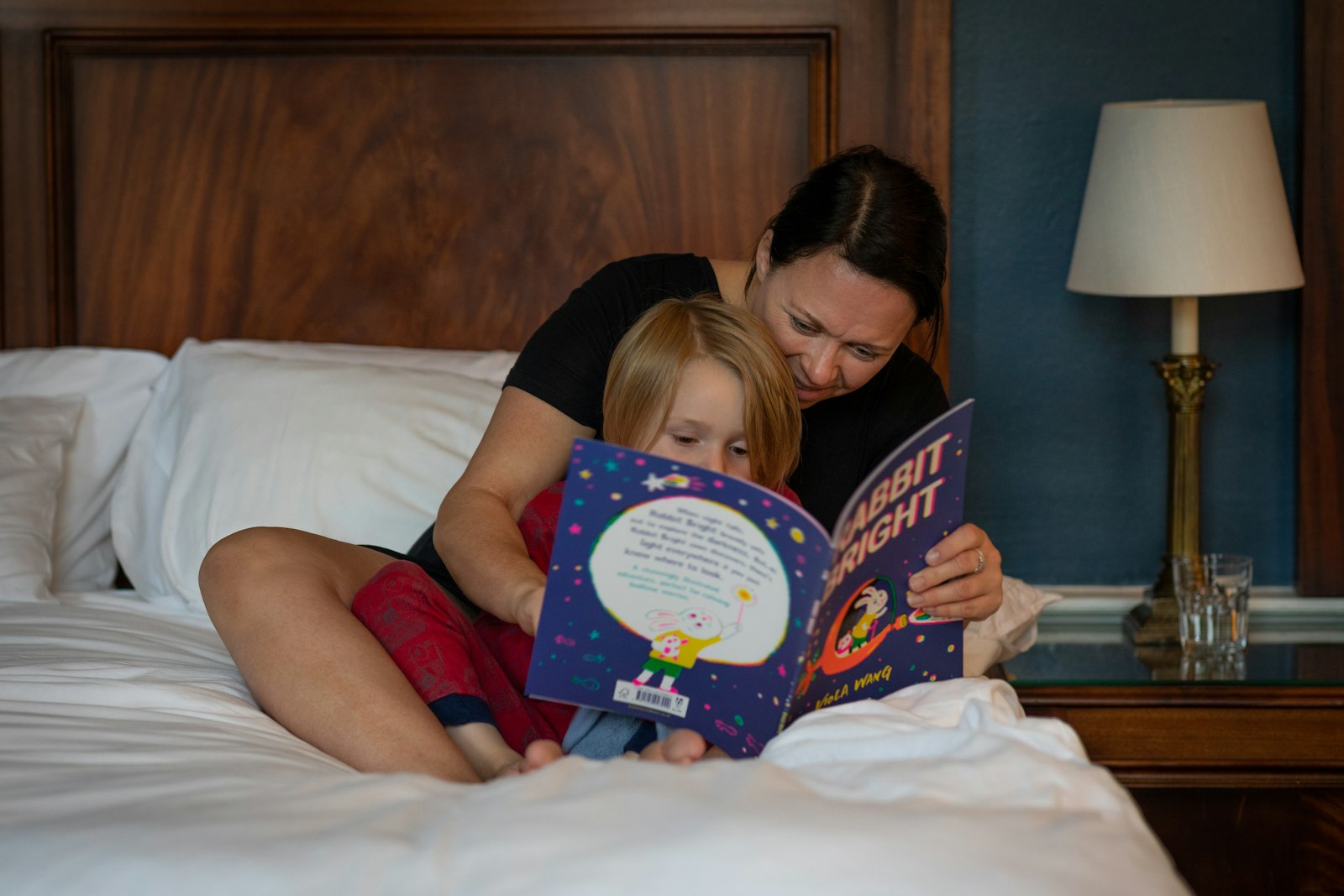
Bedtime at home can work the same way. The right song, sung the same way at the same point every night, becomes a signal that the day is winding down. Here is what I have learned about bedtime music for toddlers, why lullabies seem to calm little bodies, and how to build a short bedtime routine around them.
Why Bedtime Music for Toddlers Works
Lullabies are one of the few kinds of songs found in nearly every culture, and they tend to sound alike wherever you go: slow, steady, gently repetitive, with melodies that drift downward. That is not an accident.
In one study, researchers played lullabies from other countries to 144 American babies, songs in languages the babies had never heard. Compared with other unfamiliar songs, the lullabies lowered the babies’ heart rates, made their pupils smaller and reduced the electrical activity in their skin, all signs that their bodies were relaxing (Bainbridge et al., 2021). They responded this way throughout the first year, before they had much musical experience of their own. The study was with babies rather than toddlers, but it suggests there is something about the shape of a lullaby itself that settles a small body down.
For toddlers, there is a second reason music helps. They thrive on knowing what comes next. A song they have heard every night tells them, without any arguing, that bedtime has started. I wrote more about why predictability matters so much at this age in why routines help little kids feel safe.
QUICK SCIENCE: In a study of more than 10,000 mothers in 14 countries, young children with a consistent bedtime routine went to bed earlier, fell asleep faster, woke less in the night and slept longer. The more nights a week families kept the routine, the better the sleep tended to be, and the benefits showed up in very different cultures (Mindell et al., 2015). The researchers’ advice was that starting a routine young, and keeping it most nights, seems to matter more than the exact steps you choose.
A Simple Toddler Bedtime Routine
An earlier study tested this directly. Families of children aged 7 months to 3 years were randomly assigned either to keep doing whatever they usually did at bedtime or to follow a short three-step routine of a bath, a massage and a quiet activity like cuddling or singing. Within two weeks, the children in the routine group were falling asleep faster and waking less during the night, and their mothers reported better moods too (Mindell et al., 2009).
The routine I suggest to parents is just as simple, and it takes about 20 to 30 minutes:
1. Wind down the house. Turn off the TV and put phones away about an hour before bed, and lower the lights a little. Busy, bright rooms tell a body it is still daytime.
2. Bath or wash-up, pajamas and teeth. Keep these in the same order every night. Toddlers resist less when they know what is next.
3. One or two books. Agree on the number before you start, and stick to it kindly.
4. The same song, lights low. Sing your bedtime song slowly and a little more quietly each time through. When the song ends, the day ends.

Choosing Lullabies for Toddlers
You don’t need special bedtime music. The songs that work best share a few things: a slow, steady beat, a small range that is easy to sing quietly, and plenty of repetition. A few traditional ones I come back to again and again:
Twinkle, Twinkle, Little Star. Sing it about half as fast as you would during the day and it becomes a completely different song.
Hush, Little Baby. The verses go on as long as you need them to, and the list of promises gives a busy mind something gentle to follow.
You Are My Sunshine. Slow it right down and sing only the chorus. Many toddlers will hum along.
Brahms’ Lullaby. If you don’t know the words, hum it. The melody does the work.
Your own voice is better than any recording, even if you don’t think you can sing. Your child isn’t listening for perfect pitch. They are listening for you.
TRY THIS AT HOME: Make up a goodnight song for your child’s room. Sing goodnight to each thing as you turn down the lights: goodnight bookshelf, goodnight teddy, goodnight window, goodnight moon. Save the light switch for the very last line. After a week or two, many toddlers start singing the goodnights for you.
Naptime Music
Naptime works best with a shorter version of the same signal. Use the same song you sing at night, just once through. The familiarity does most of the work, and it helps on days when nap happens somewhere new, like at a grandparent’s house or in the car.
What to Skip at Bedtime
Upbeat songs and dance music. Save the movement songs for the morning. At night you want a tempo slower than a walking pace.
Long playlists. A playlist that runs for an hour can turn into something a toddler needs to fall back asleep at 2 a.m. If you play recorded music, keep it short and quiet, and let it end.
Screens as the wind-down. A show feels calming, but bright screens close to bedtime can make it harder for little ones to settle. I wrote about this more in why screen-free matters in early childhood.
Giving up after three nights. A new routine often feels harder before it feels easier. Give it two weeks before deciding whether it works.
THE MAILBOX MELODIES METHOD: Every month’s CD includes calm songs and lullabies alongside the movement and sing-along tracks, so families always have a fresh bedtime song to learn together. I write each song with a slow, steady beat and a small range that is easy for a tired grown-up to sing quietly, and I try them all out on my own two little ones first. Mailbox Melodies is a kids music mail membership for ages 0 to 6+, $19 a month, and an envelope with your child’s name on it ships on the 15th.
References
- Bainbridge, C. M., Bertolo, M., Youngers, J., Atwood, S., Yurdum, L., et al. (2021). Infants relax in response to unfamiliar foreign lullabies. Nature Human Behaviour, 5(2), 256–264. Link
- Mindell, J. A., Li, A. M., Sadeh, A., Kwon, R., & Goh, D. Y. T. (2015). Bedtime routines for young children: A dose-dependent association with sleep outcomes. Sleep, 38(5), 717–722. Link
- Mindell, J. A., Telofski, L. S., Wiegand, B., & Kurtz, E. S. (2009). A nightly bedtime routine: Impact on sleep in young children and maternal mood. Sleep, 32(5), 599–606. Link
Questions Parents Ask About Bedtime Music
What is the best bedtime music for toddlers?
Slow, simple songs with a steady beat and lots of repetition, ideally sung by you. Traditional lullabies like Twinkle, Twinkle, Little Star, Hush, Little Baby and Brahms’ Lullaby work well, as long as you sing them slower and quieter than you would during the day.
How long should a toddler bedtime routine be?
Most families find 20 to 30 minutes is plenty. What matters more is doing the same steps in the same order most nights, ending with the same song.
Should I play music all night?
I wouldn’t. Music that plays all night can become something your toddler needs to fall back asleep. Sing or play a song or two as part of the routine, then let the room go quiet.
My toddler wants the same song every single night. Is that okay?
It is more than okay, it is the point. Repetition is how toddlers feel safe and how they learn, and a familiar song tells them bedtime has started. You can always add a new song after the old favorite instead of replacing it.
Can an older sibling share the bedtime song?
Yes, and older siblings often love being the one who sings it. A shared bedtime song can carry a family through years of bedtimes.

— Ms. Chelsea
Written by
Ms. Chelsea
Before starting Mailbox Melodies, Chelsea created Grape Jammers Music, a music education business in Napa, California, where she still teaches toddler music classes today. She has also taught preschool, is classically trained in voice, and has over 30 years of stage experience — including professional performances at Disneyland and SeaWorld. These days she writes and records the songs, draws the zines, and packs every envelope herself, and tries it all out on her own two little ones for inspiration.
Read Chelsea’s letter →How it works
Music class, delivered to your mailbox
Every month’s CD includes calm songs and lullabies for bedtime, with your child’s name on the envelope.
Join
Sign up in under a minute, for your family or as a gift.
Ms. Chelsea gets to work
She writes and records the month’s songs and packs every envelope herself.
Watch the mailbox
Real mail with your child’s name on it, right to your mailbox. Pop in the CD and music class begins at home.
$19 a month · ships on the 15th · cancel anytime
See How It WorksScreen-free music mail for developing minds.