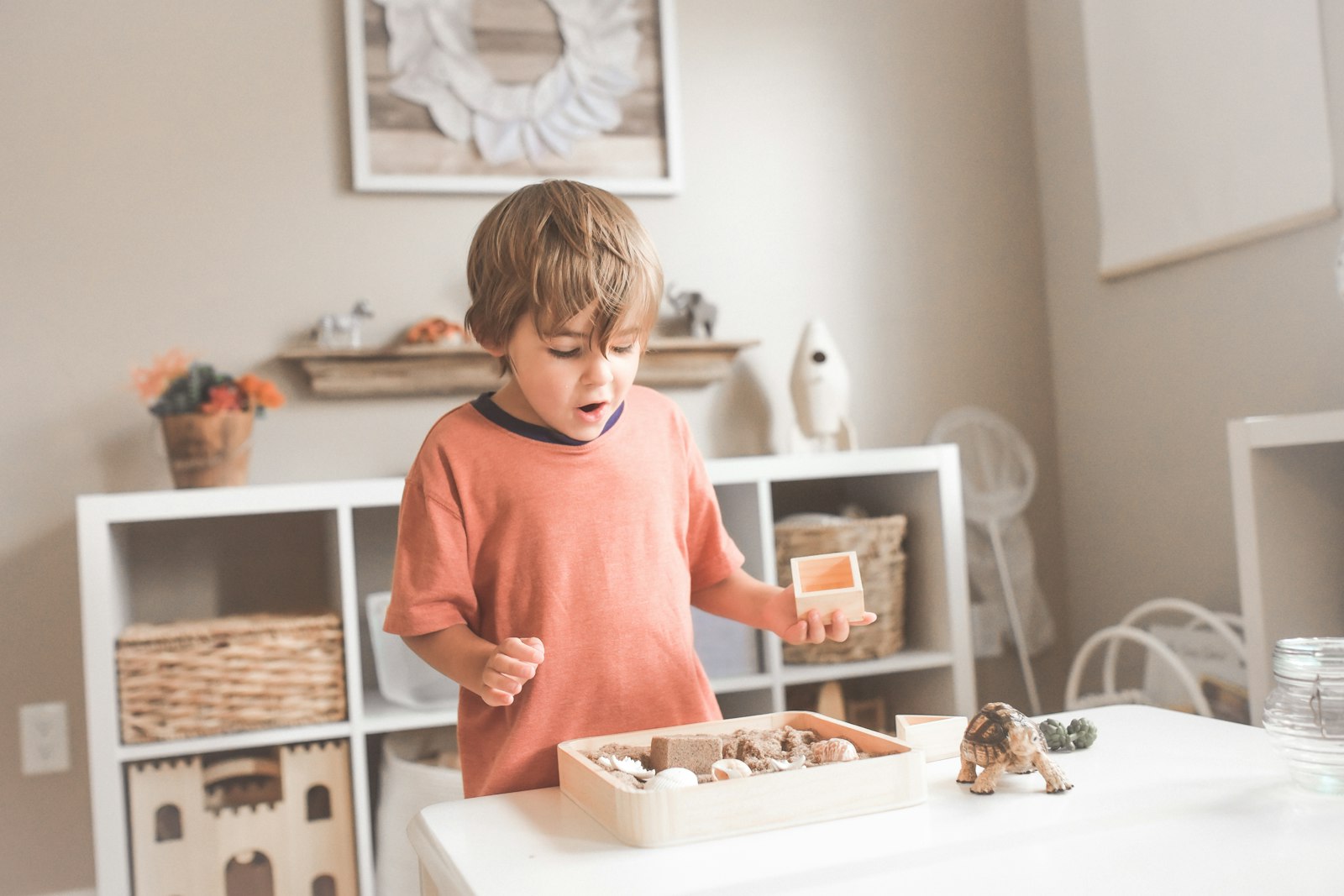
One of my favorite moments in a Grape Jammers class is when I tip out the instrument basket and step back. For the first minute, most toddlers look at me to see what they are supposed to do. Then someone starts banging two rhythm sticks together, someone else discovers that an egg shaker sounds different inside a drum, and before long the whole room is busy inventing music nobody asked them to make.
That is independent play, and it is one of the best things a young child can do with their time. It is also one of the hardest things to make room for in a busy house, so here is why independent play for toddlers matters, how to start with just a few minutes, and why a little boredom is part of it.
What Independent Play for Toddlers Gives Them
When a child plays on their own, they are doing all the thinking. They decide what to do, try it, notice it didn’t work and try something else. Those are the early building blocks of planning, problem-solving and focus, the same skills grown-ups call executive function.
The American Academy of Pediatrics describes play as essential to healthy development, and notes that it helps build those executive function skills along with language and social skills (Yogman et al., 2018). It is not a break from learning. For a toddler, it is the learning.
QUICK SCIENCE: In one study of 6- and 7-year-olds, children who spent more of their time in less-structured activities, like free play, showed better self-directed executive function, the kind where a child sets their own goals and figures out how to reach them (Barker et al., 2014). The children were older than toddlers and the study found an association rather than proof, but it suggests that unscheduled time is not wasted time.
Why a Little Boredom Is Good
Most of us feel a pull to fix boredom the second we hear “I’m bored” or see a toddler wandering around the living room. But boredom is often the uncomfortable minute right before play starts. If we fill every one of those minutes with a show or an activity we planned, a child never gets the chance to find out what they would have come up with on their own.
This doesn’t mean leaving a toddler to fend for themselves. It means letting the wandering go on a little longer than feels natural before you step in, and trusting that something usually happens. I wrote a whole list of ideas for the moments when nothing does in 50 screen-free activities for toddlers.
How to Encourage Independent Play
Fill their cup first. Toddlers play on their own most happily after some real connection time with you. Ten minutes of sitting on the floor together often buys you ten minutes of independent play afterward.
Start small. For a young toddler, a few minutes is a real achievement. Stay in the room, busy with something of your own, and let the minutes grow on their own.
Offer fewer, simpler things. Open-ended toys like blocks, scarves, pots and spoons can be a hundred different things, while a toy with one button does one thing. When toddlers have fewer toys out at once, they tend to play longer and more inventively with each one (Dauch et al., 2018). Rotating a few toys in and out of a closet keeps things feeling new.
Don’t interrupt good play. When a toddler is absorbed, even praise can break the spell. Save the “wow, look at that tower” for when they look up and show you.
Keep it reachable. Put a few toys on a low shelf where your child can choose for themselves. Choosing is part of the play.
Independent Play by Age
Every child is different, so treat these as a rough guide rather than a target.
Babies: a few minutes on a blanket on the floor, looking at a toy or their own hands, is independent play. Stay close and let them explore.
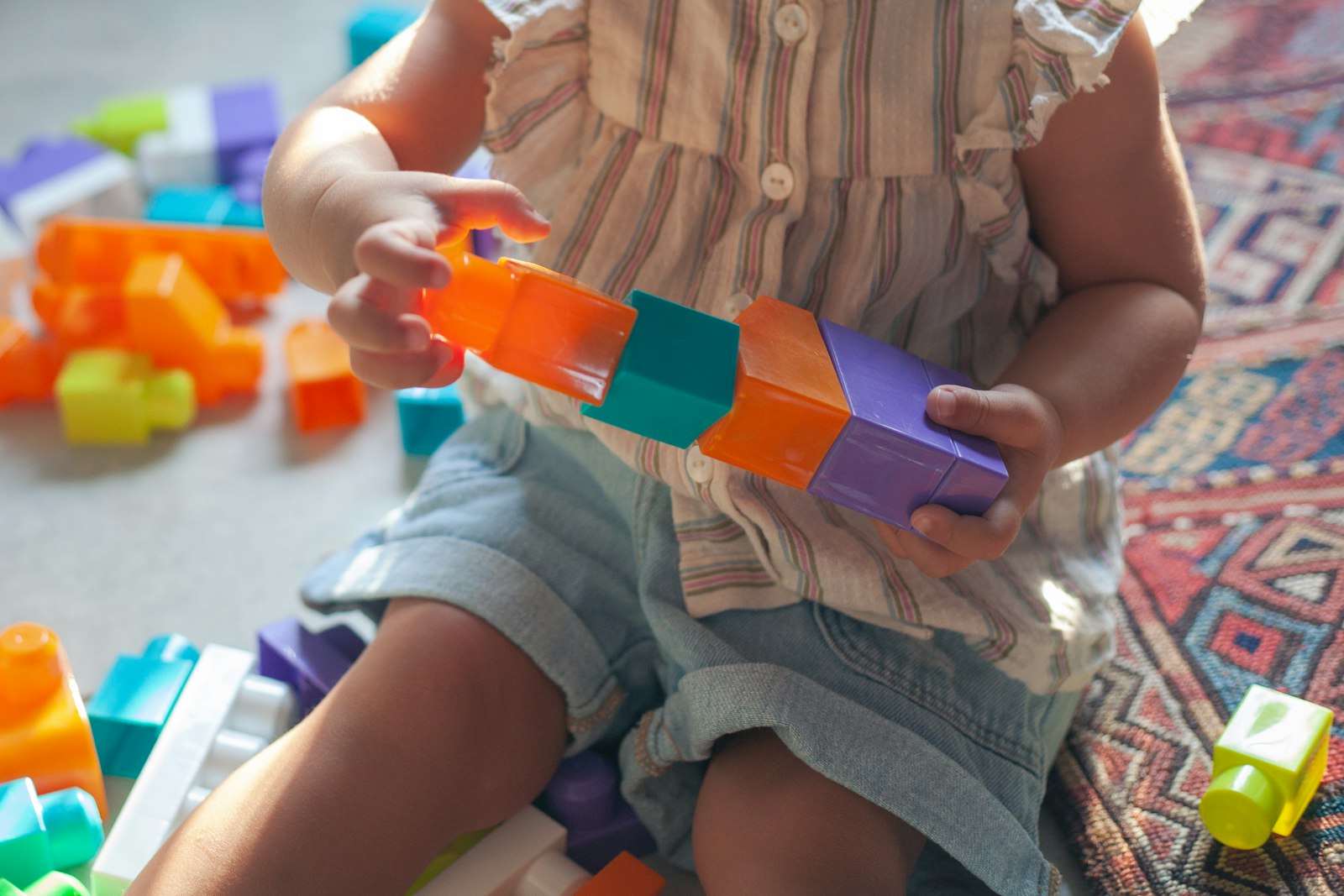
1 to 2 years: often five to ten minutes at a time, usually with you nearby. Containers, stacking, filling and dumping are the favorites at this age.
2 to 3 years: fifteen minutes or more is common once play gets more imaginative, like feeding a stuffed animal or building a road.
3 and up: many children can play on their own for thirty minutes or longer when they are absorbed in a story or a project.
TRY THIS AT HOME: Make a music basket. Fill a low basket with a few egg shakers, a scarf, a wooden spoon and a small pot, and add a CD player your child can start on their own. Put it out after some time together, sit nearby with your coffee, and see what happens. Some toddlers will drum, some will dance with the scarf, and some will invent a parade. All of it counts.
What to Skip
Screens as independent play. A show keeps a child quiet, but they are watching someone else’s ideas instead of building their own. I wrote more about this in why screen-free matters in early childhood.
Expecting too much too soon. If your toddler only manages three minutes today, that is three minutes more than yesterday.
A room full of toys. More choices usually means shorter play, not longer.
THE MAILBOX MELODIES METHOD: I make every CD so a child can put it on and play along by themselves, with songs that invite them to drum, dance, freeze and sing back. Each envelope also includes a booklet, stickers and fun extras, and sometimes a craft, which make good fuel for a quiet half hour. If you want a simple player your child can work on their own, I compared the options in music boxes and music players for toddlers. Mailbox Melodies is a kids music mail membership for ages 0 to 6+, $19 a month, and an envelope with your child’s name on it ships on the 15th.
References
- Yogman, M., Garner, A., Hutchinson, J., Hirsh-Pasek, K., Golinkoff, R. M., et al. (2018). The power of play: A pediatric role in enhancing development in young children. Pediatrics, 142(3), e20182058. Link
- Barker, J. E., Semenov, A. D., Michaelson, L., Provan, L. S., Snyder, H. R., & Munakata, Y. (2014). Less-structured time in children’s daily lives predicts self-directed executive functioning. Frontiers in Psychology, 5, 593. Link
- Dauch, C., Imwalle, M., Ocasio, B., & Metz, A. E. (2018). The influence of the number of toys in the environment on toddlers’ play. Infant Behavior and Development, 50, 78–87. Link
Questions Parents Ask About Independent Play
How long should a toddler play independently?
There is no set number. A few minutes is a good start for a young toddler, and many three-year-olds can play on their own for half an hour or more when they are absorbed. Let the time grow gradually rather than aiming for a target.
My toddler won’t play alone at all. What should I do?
Start with connection, then step back a little at a time. Sit on the floor and play together, then slowly shift to sitting nearby with something of your own. Many toddlers who cling at first will wander off to play once they know you are staying put.
Is it okay to leave the room during independent play?
For toddlers, I would stay in the room or within easy earshot, for safety and for reassurance. Independent play means the child leads the play, not that they are alone.
What are the best toys for independent play?
Open-ended ones: blocks, stacking cups, scarves, play dough, pots and wooden spoons, simple instruments and a few books. Fewer toys out at a time usually works better than many.
Does watching a show count as independent play?
Not really. Watching is a different activity from playing, because the ideas come from the screen instead of from the child. Shows have their place, but they don’t build the same skills.

— Ms. Chelsea
Written by
Ms. Chelsea
Before starting Mailbox Melodies, Chelsea created Grape Jammers Music, a music education business in Napa, California, where she still teaches toddler music classes today. She has also taught preschool, is classically trained in voice, and has over 30 years of stage experience — including professional performances at Disneyland and SeaWorld. These days she writes and records the songs, draws the zines, and packs every envelope herself, and tries it all out on her own two little ones for inspiration.
Read Chelsea’s letter →How it works
Music class, delivered to your mailbox
Songs a child can put on and play along to by themselves, on a CD with their name on the envelope every month.
Join
Sign up in under a minute, for your family or as a gift.
Ms. Chelsea gets to work
She writes and records the month’s songs and packs every envelope herself.
Watch the mailbox
Real mail with your child’s name on it, right to your mailbox. Pop in the CD and music class begins at home.
$19 a month · ships on the 15th · cancel anytime
See How It WorksScreen-free music mail for developing minds.