
Let me put my cards on the table before anything else: I run one of the subscriptions on this list. Mailbox Melodies is mine, and I’m not going to pretend otherwise or bury it in the middle hoping you won’t notice. What I can offer instead is the same honesty I brought to Yoto vs Toniebox — because after years of teaching toddler music classes, I’ve watched real families use all of these, and the truth is that different subscriptions suit different houses.
So here’s my honest read on the best music subscriptions for kids, prices included, tradeoffs included.
The Best Music Subscriptions for Kids at a Glance
| Option | Monthly cost | Player needed | Screen-free for the child | Best for |
|---|---|---|---|---|
| Yoto Club | From $4.99 | Yes — $60 to $110 | Yes | Story-loving preschoolers who want to run it themselves |
| Tonies | None required | Yes — about $100 starter set | Yes | The youngest listeners, and sturdy simplicity |
| Mailbox Melodies | $19, or $199 prepaid for a year | No — any CD player works | Yes | Families who want songs plus a ritual and a plan |
| Streaming family plan | $21.99 ($12.99 individual) | No — a phone, tablet or speaker | No | Catalog breadth, car trips, family dance parties |
| Library card | Free | A CD player, if you borrow discs | Yes | A zero-dollar year |
Prices are current at the time of writing and do drift. The detail behind every number is in my full cost breakdown.
How I Judge a Kids’ Music Subscription
Four questions, formed over years of watching what children actually return to. Does the child get to do something — choose, hold, operate, sing along — or only consume? Is there a screen anywhere in the loop, and who controls it? Can the adults in the house live with it daily? And what does it really cost once you count the hardware, not just the monthly line?
QUICK SCIENCE: Across a large longitudinal study of Australian families, it was shared music activity at home — singing and playing together — that was associated with later gains in vocabulary, attention, and prosocial skills, more than musical stuff simply being present. Whatever you subscribe to, the version where a grown-up joins in is the version doing the work. (Williams et al., 2015)
Yoto Club
Yoto’s players run audio from physical cards — no screen, no camera, and a child can operate one alone by age two or three. Yoto Club is the subscription layer: at the time of writing it starts around $4.99 a month for a digital-only tier, with higher tiers adding monthly card credits and store discounts. The catalog leans heavily toward stories and audiobooks, with music as a strong supporting act.
Where it shines: child independence. Watching a three-year-old pick a card, slot it, and settle in is genuinely lovely. What to weigh: the player is a separate purchase — roughly $60 to $110 depending on the model — and the club’s best value sits in its story catalog, so if music specifically is your goal, check what your tier actually includes. My fuller thoughts are in Yoto vs Toniebox.
Tonies
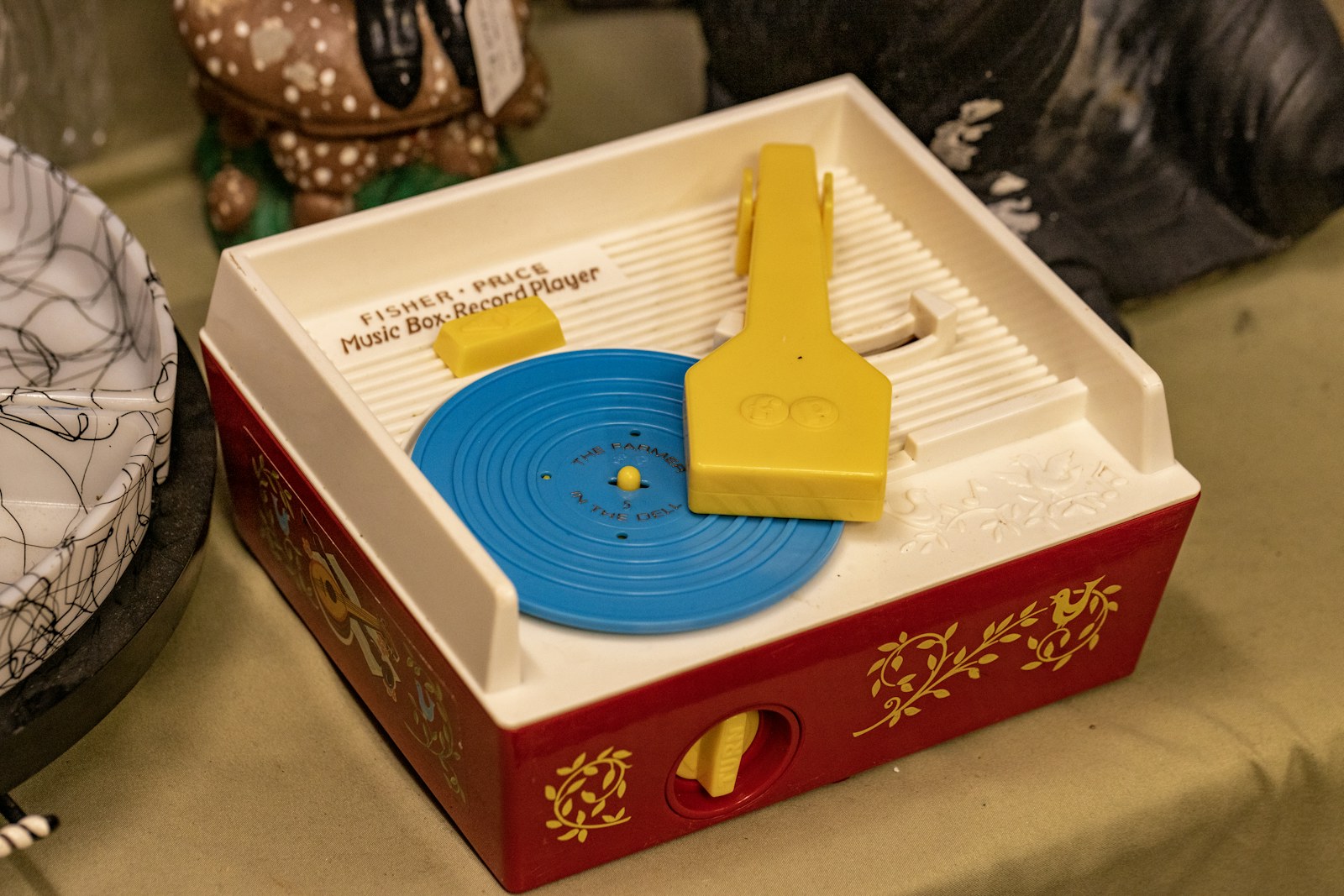
The Toniebox is the soft, squeezable screen-free player, and the characters that sit on top carry the audio. The current starter set runs around $100 at the time of writing, and individual Tonies typically cost $15 to $20 each. There’s no required subscription — you buy characters as you go — which makes it more a collection than a club.
Where it shines: the youngest listeners. The figurine-on-top interface is the most toddler-proof design I’ve seen, and the characters double as small toys. What to weigh: cost accumulates per character, the catalog skews toward licensed characters over traditional songs, and there’s no built-in rhythm of new music showing up — you have to keep choosing and buying.
Mailbox Melodies
Mine, so judge this section accordingly. Mailbox Melodies is $19 a month: an envelope ships on the 15th with a CD of songs, a booklet with lyrics and movement games, stickers, sometimes a small craft, and a download code for the tracks. It’s built for ages 0 to 6+ and sequenced the way I sequence my classes — songs to start, songs to move to, a quiet track to land on.
Where it shines: it’s the only option on this list built around a monthly ritual of real mail addressed to your child, and the only one where the songs come with a plan — the booklet tells you what to do with each track. It also needs no proprietary player: any CD player works, and the download code covers car and travel. What to weigh: it’s the most expensive monthly line here, there’s no story catalog, and if your child is mostly an audiobook kid, Yoto will fit better. I’ve said the same to parents’ faces and I’ll say it here.
Streaming Family Plans
The cheapest per song by miles. Spotify’s Family plan is $21.99 a month at the time of writing (Individual is $12.99) and includes Spotify Kids, a curated app with parental controls; Apple Music and Amazon run comparable family tiers. If your family already pays for one, kids’ music is effectively included.
Where it shines: catalog and convenience — every version of every song, instantly. What to weigh: streaming lives on a screen-bearing device, usually yours, and the interface decides what plays next unless someone intervenes. It’s a fine delivery system for family dance parties; it’s a weaker system for handing a small child ownership of their own listening. I go deeper on this in CDs vs Streaming for Kids.
The Free Option Nobody Advertises
Your library card. Most systems lend children’s CDs, and apps like Hoopla stream kids’ albums free with a library login. There’s no ritual, no mail, and the selection is whatever it is — but if the budget says zero this year, the music itself is sitting there waiting, and a weekly library-CD tradition has its own kind of charm.
So Which One?
For a story-loving preschooler who wants independence: Yoto. For the youngest listeners and sturdy simplicity: Tonies. For a family that wants songs plus the ritual and a plan for using them: mine. For catalog breadth on a budget you’re already paying: streaming. For zero dollars: the library. And plenty of families mix — a Yoto for stories, Mailbox Melodies for the monthly songs, the library for everything else. If mail-based clubs generally are the appeal, I keep a wider list in Mail Clubs for Kids. A subscription also travels well as a gift, which I cover in musical gifts for grandchildren.
THE MAILBOX MELODIES METHOD: I designed around the two things no player or catalog gave my class families: anticipation (an envelope with your name on it, every month on the 15th) and guidance (a booklet that turns each track into something to do together). The CD is the music; the ritual is the curriculum.
References
- Williams, K. E., Barrett, M. S., Welch, G. F., Abad, V., & Broughton, M. (2015). Associations between early shared music activities in the home and later child outcomes. Early Childhood Research Quarterly. Link
- Gerry, D., Unrau, A., & Trainor, L. J. (2012). Active music classes in infancy enhance musical, communicative and social development. Developmental Science. Link
- Sosa, A. V. (2016). Association of the type of toy used during play with the quantity and quality of parent-infant communication. JAMA Pediatrics. Link
- Current pricing sources: Yoto Club, Spotify plan pricing overview
Questions Parents Ask Me
What’s the best music subscription for a toddler specifically?
For pure toddler music, I’d narrow it to Tonies for hardware simplicity or Mailbox Melodies for song content with a plan — and I’d read my complete guide to music for toddlers first, because what toddlers need most is cheap: repetition and your voice.
Do any of these require a screen?
Yoto, Tonies, and Mailbox Melodies are screen-free for the child. Streaming requires a device with an app, though parents can run it to a smart speaker.
Which is cheapest overall?
The library, then streaming you already pay for. Among the dedicated options, first-year totals vary a lot once hardware counts — I did the full math in What Kids’ Music Subscriptions Really Cost.
Can I do more than one?
Many families do, and they cover different jobs: stories vs songs vs catalog. Start with one, see what your child actually reaches for after the novelty fades, and build from there.
What age range do these cover?
Yoto and Tonies publish rough ranges of about 3–12 and 3–8 respectively, with Tonies skewing youngest in practice. Mailbox Melodies is made for ages 0 to 6+.

— Ms. Chelsea
Written by
Ms. Chelsea
Before starting Mailbox Melodies, Chelsea created Grape Jammers Music, a music education business in Napa, California, where she still teaches toddler music classes today. She has also taught preschool, is classically trained in voice, and has over 30 years of stage experience — including professional performances at Disneyland and SeaWorld. These days she writes and records the songs, draws the zines, and packs every envelope herself, and tries it all out on her own two little ones for inspiration.
Read Chelsea’s letter →How it works
Music class, delivered to your mailbox
This is the one on the list that is mine: songs, a plan for using them, and real mail addressed to your child.
Join
Sign up in under a minute, for your family or as a gift.
Ms. Chelsea gets to work
She writes and records the month’s songs and packs every envelope herself.
Watch the mailbox
Real mail arrives with your child’s name on it. Pop in the CD and music class begins at home.
$19 a month · ships on the 15th · cancel anytime
See How It WorksScreen-free music mail for developing minds.