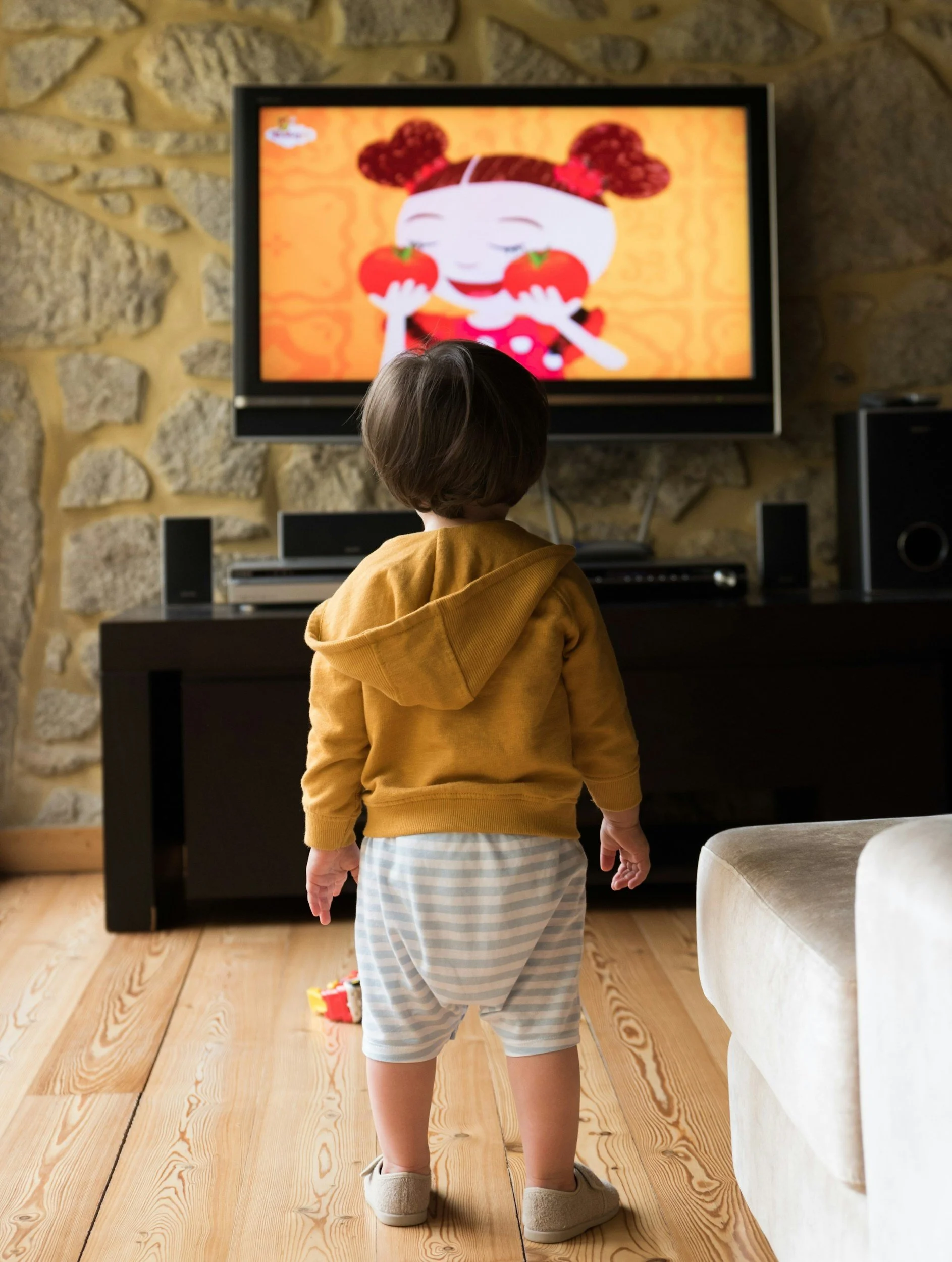
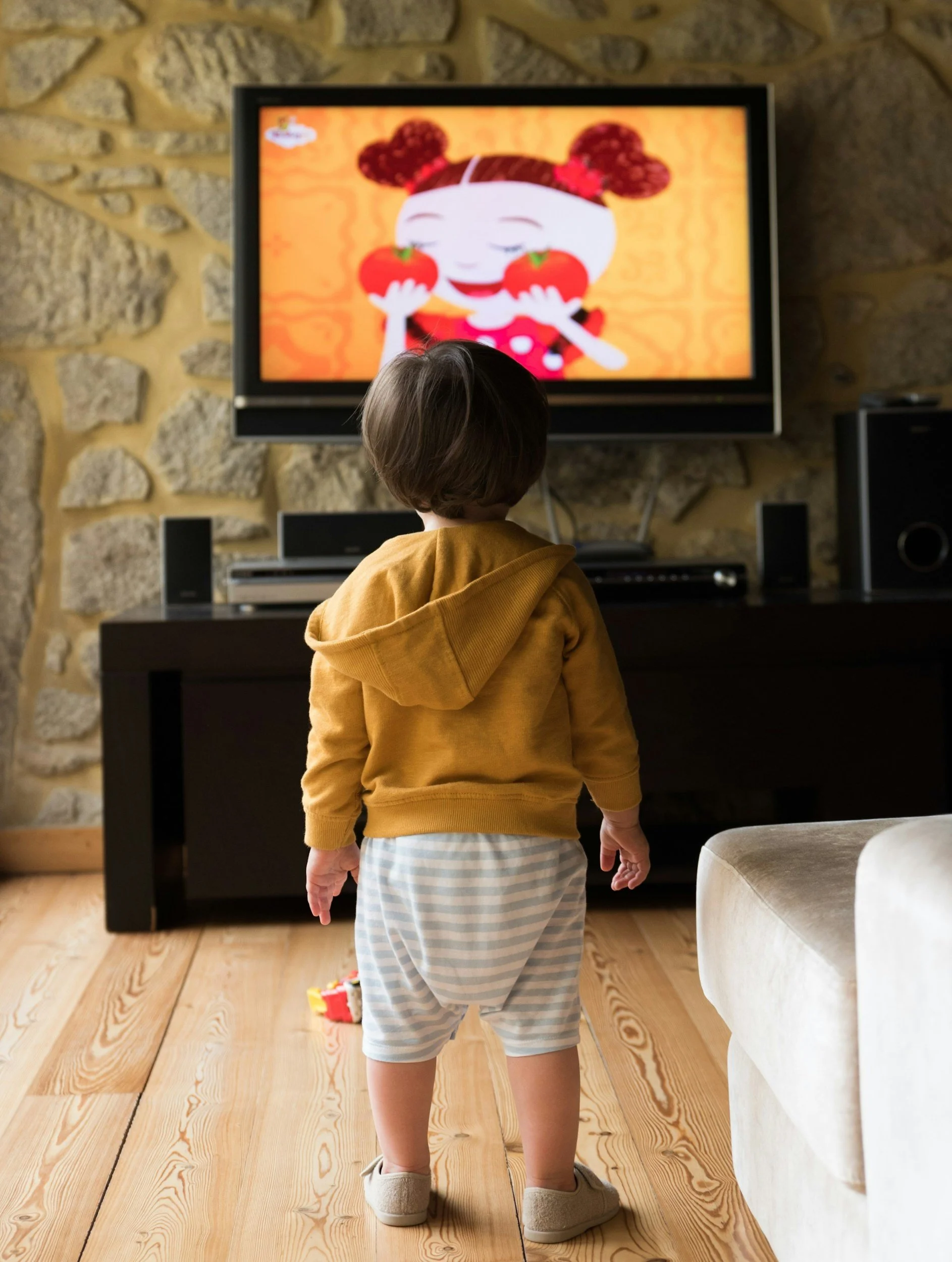
Let’s start with a deep breath, because this is a topic that comes loaded with guilt — and guilt is not the point. Every parent I know has handed over a phone in a grocery line or pressed play on a show to get through a hard afternoon. You are not failing your child. You’re surviving a Tuesday.
What I do want to share is what the research actually says about screens in the early years, calmly and without the scare tactics. Because once you understand why screen-free time matters, the small choices get a lot easier — and a lot less stressful. When it comes to choosing presents, the same thinking shapes my list of screen-free Christmas gifts for toddlers.
What the experts recommend
The American Academy of Pediatrics (AAP) offers some simple guideposts for the youngest years:
QUICK SCIENCE: The AAP guidelines at a glance
- Under 18 months: avoid screen media other than video-chatting with loved ones.
- 18–24 months: if you introduce screens, choose high-quality programming and watch together.
- 2–5 years: limit non-educational screen time to about one hour on weekdays.
- At every age, co-viewing — being right there, talking about what you see — matters enormously.
These aren’t meant to be a test you pass or fail. They’re a gentle north star.
What the research is finding
A growing body of research links heavy early screen use with differences in how young children develop language and communication. One of the largest recent studies followed about 7,000 children in Japan and found that more screen time at age one was associated with delays in communication and problem-solving skills at ages two and four — with the strongest links among children watching four or more hours a day (Takahashi et al., 2023).
A 2023 systematic review of multiple studies similarly found associations between heavy “smart media” use and speech and language delays in young children. And brain-imaging research has connected higher-than-recommended screen use in preschoolers with differences in the white matter that supports language and early literacy (Hutton et al., 2020).
Here’s the honest scientist’s caveat, and we think it matters: most of this research shows correlation, not proof of cause. Children who use more screens often differ in other ways too. So we hold these findings thoughtfully — not as alarm bells, but as a consistent, gentle signal pointing in one direction.
The real story: it’s about what screens replace
If there’s one idea we’d love you to carry away, it’s this. The concern in the early years isn’t only what a screen does — it’s what a screen quietly replaces.
In the first few years, children’s brains are built through what researchers call “serve and return”: your baby coos, you coo back; they point, you name it; they babble, you light up. These thousands of tiny back-and-forth exchanges are how language, attention, and emotional regulation get wired in. They are, quite literally, the curriculum of early childhood.
A screen can’t serve and return. It talks at a child, not with them. So every hour of passive watching is an hour not spent in the conversational, hands-on, face-to-face play that builds those foundational skills. That’s the heart of it. Not screens as villains — but real human interaction as the irreplaceable hero.
THE MAILBOX MELODIES METHOD
This is the whole reason Mailbox Melodies sounds the way it does. It’s an audio-first, screen-free experience by design — a CD and booklet, not an app. Your child listens, moves, breathes, and sings with you in the room. I designed it to invite the serve-and-return connection that screens can’t offer: you singing the hand motions together, you “smelling the flowers” side by side. The music is the prompt; you are the magic. If you are weighing a screen-free audio player for the same reason, here is my honest Yoto vs Toniebox comparison.
Screen-free doesn’t mean stimulation-free
A worry I hear often: “If I cut back on screens, won’t my child be bored?” Happily, no — and a little boredom is actually good for them; it’s the doorway to imagination (it’s also how a plain cardboard box becomes a spaceship). Screen-free simply means trading passive watching for active doing. And the active version is where development lives. If you want somewhere concrete to start, here are 50 screen-free activities for kids that use only what you already have at home.
TRY THIS AT HOME
- Make audio your secret weapon. Music, stories, and lullabies hold a child’s attention and keep their hands, body, and imagination free. (I may be biased here.)
- Swap, don’t just subtract. Heading into a long car ride or a witching-hour meltdown? Have a go-to screen-free ritual ready — a song, a movement game, a “what do you hear?” listening hunt.
- Protect the connecting hours. Aim to keep meals, the bedtime wind-down, and the first hour of the day screen-free. These are your richest serve-and-return moments.
- When you do use screens, co-view. Sit close, talk about what’s happening, connect it to real life. A watched-together show is a different thing than a handed-over one.
- Let yourself off the hook. A screen on a hard day is not a character flaw (nobody is revoking your parenting license). Aim for the overall pattern, not perfection.
The gentle takeaway
Screen-free time in the early years isn’t about deprivation, and it certainly isn’t about guilt. It’s about protecting the irreplaceable: the conversations, the eye contact, the songs sung together that wire a young brain for language and calm.
You don’t need to be perfect. You just need to keep showing up as your child’s favorite, most responsive, most loving “screen” of all — the human face that looks back, sings back, and breathes alongside them. That’s the experience I try to pour into your mailbox every single month. Audio is the easiest screen-free swap there is, though how a child gets that audio matters — I weighed that up in CDs vs Streaming for Kids.
References
- American Academy of Pediatrics. Media and Young Minds / screen time recommendations for children. Summary via AAP HealthyChildren.org.
- Takahashi, I., Obara, T., Ishikuro, M., et al. (2023). Screen Time at Age 1 Year and Communication and Problem-Solving Developmental Delay at 2 and 4 Years. JAMA Pediatrics. JAMA Network · PMC10442786
- Relationship Between Speech Delay and Smart Media in Children: A Systematic Review (2023). PMC10580299
- Hutton, J. S., et al. (2020). Associations Between Screen-Based Media Use and Brain White Matter Integrity in Preschool-Aged Children. JAMA Pediatrics. Overview via JAMA Network.
Questions Parents Ask About Screen Time
Is a little screen time actually harmful?
The honest answer is that the research is more about displacement than damage. What the evidence more consistently points to is what screen time replaces — back-and-forth conversation, movement, unstructured play. A little, in a day full of those things, is a different situation from a lot in a day without them.
What about video calls with grandparents?
Generally treated differently, and sensibly so — a video call is a real conversation with a real person who responds. Most guidance carves it out from screen-time limits, and I would too.
My child watches while I make dinner. Should I feel bad?
No. Dinner has to happen. If you want to change anything, change what’s on rather than whether it’s on — something slow and narrative beats something fast-cut — or swap in audio, which frees their eyes and hands.
Is audio — music, audiobooks — the same as a screen?
It isn’t, and the difference is specific. Audio leaves a child’s eyes and body available, so they build, move, and act things out while listening. That’s most of the reason I mail a CD rather than a login.
How do I go screen-free without a plan for the empty time?
You don’t have to fill all of it — boredom does useful work. But having ten ideas ready makes the first week far easier, which is exactly what the free printable in this article is for.

— Ms. Chelsea
Written by
Ms. Chelsea
Before starting Mailbox Melodies, Chelsea created Grape Jammers Music, a music education business in Napa, California, where she still teaches toddler music classes today. She has also taught preschool, is classically trained in voice, and has over 30 years of stage experience — including professional performances at Disneyland and SeaWorld. These days she writes and records the songs, draws the zines, and packs every envelope herself, and tries it all out on her own two little ones for inspiration.
Read Chelsea’s letter →How it works
Music class, delivered to your mailbox
Music is the screen-free hour that runs itself — and mine arrives in the mailbox on the 15th of every month.
Join
Sign up in under a minute, for your family or as a gift.
Ms. Chelsea gets to work
She writes and records the month’s songs and packs every envelope herself.
Watch the mailbox
Real mail arrives with your child’s name on it. Pop in the CD and music class begins at home.
$19 a month · ships on the 15th · cancel anytime
See How It WorksScreen-free music mail for developing minds.