
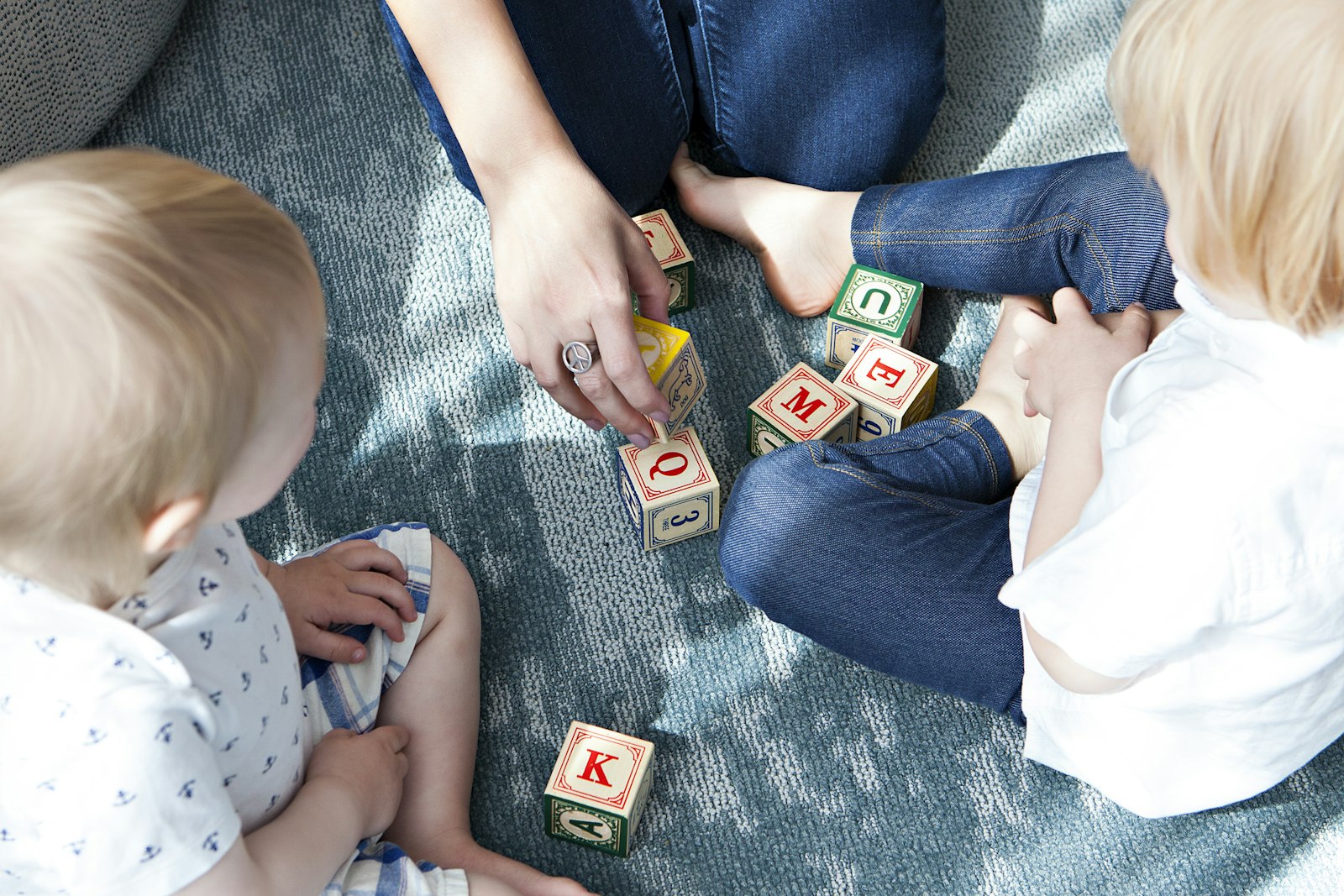
If you’ve ever searched for screen free activities for kids at 4:45 p.m. while someone small clung to your leg, this list is for you. I wrote it for the stretch of day when dinner isn’t made, everyone is tired, and the tablet is right there looking very easy. These are the screen-free activities for kids I actually reach for.
First, no guilt. Screens happen in every home, including mine. The goal isn’t a perfect record — it’s having a handful of go-to ideas ready so the screen becomes one choice among many instead of the only one. If you want the deeper why behind our screen-free approach, I wrote about it in Why Screen-Free Matters for Childhood Development.
Every activity uses things you already own. No batteries, no printouts, no setup longer than the activity itself. I turned the whole list into a free printable — the 50 Screen-Free Activities Bingo, a pair of bingo cards designed to live on your fridge, not your phone. Pop your email in below and I’ll send it right over. And to get you started tonight, ten of my favorites are further down this page.
Free printable
Get the 50 Screen-Free Activities Bingo
Two screen-free bingo cards for your fridge — all fifty activities, plus a page explaining every square.
Why bother, when the tablet is right there?
A quick bit of science before the list, because I think it helps to know this is worth the effort.
Research keeps pointing the same direction: what young children need most is back-and-forth time with the people who care for them, and screens tend to quietly crowd that out. A large study in JAMA Pediatrics following about 2,400 children found that more screen time at ages two and three was associated with lower scores on developmental screening at three and five (Madigan et al., 2019). A 2023 study of nearly 8,000 one-year-olds found something similar for communication and problem-solving skills at ages two and four (Takahashi et al., 2023).
These are associations, not verdicts — researchers are careful to say screens aren’t shown to cause delays, and so am I. But here’s the finding I think about most: it isn’t only screens. One study watched parents and babies play with electronic toys versus plain ones, and the talking toys did the most crowding out — fewer words from parents, fewer sounds from babies, less conversation all around (Sosa, 2016). When the toy does the singing, everyone else goes quiet.
That’s the real case for this list. Blocks, pots, songs, and cardboard leave room for your voice. And your voice, it turns out, is the developmental gold standard.
QUICK SCIENCE
The American Academy of Pediatrics considers open-ended play so important for brain development that it recommends pediatricians “prescribe” it at checkups (Yogman et al., 2018). Play isn’t a break from learning. For toddlers, play is the learning.
One more reassurance: your toddler does not need you on the floor for all fifty of these. Many are designed for them to do while you make dinner. That’s not cutting corners — independent play is a skill worth building, too.
Ten screen-free activities for kids you can start tonight
Here are two from each of the five categories on my master list, so you can see how simple these really are.
- Freeze dance (Movement and Music) — sing or hum, then stop. The stillness is the funny part.
- Laundry basket boat (Movement and Music) — sit inside, row with wooden spoons, sing a rowing song.
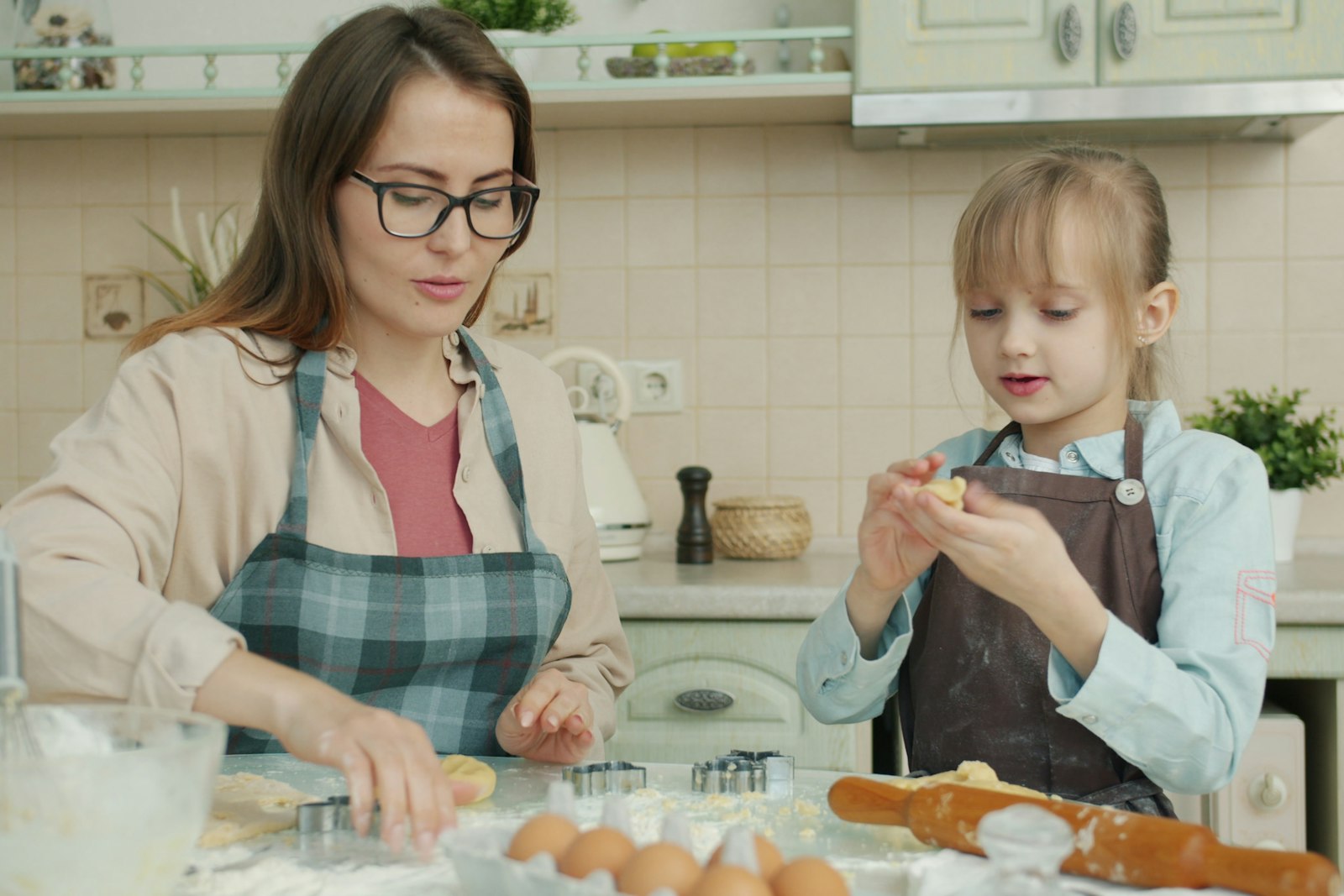
- Stir the batter (Kitchen Helpers) — baking cookies together counts as math, motor skills, and connection all at once.
- Snack picnic on the kitchen floor (Kitchen Helpers) — same crackers, brand-new experience.
- Puddle stomping (Outside) — the boots are washable and so is the child.
- Water painting (Outside) — a bucket of water and a real paintbrush on the fence or sidewalk.
- Sticker spot (Quiet Play) — a sheet of stickers and a piece of paper. That’s it. That’s the activity.
- Play the same track again (Quiet Play) — if your toddler wants the same song for the tenth time, that repetition is doing real work.
- Puppet chat (Make-Believe) — a sock on your hand asking about their day gets better answers than you will.
- Concert (Make-Believe) — they perform, you are the audience, applause is mandatory.
What’s in the 50 Screen-Free Activities Bingo
The printable turns the list into a game: two big bingo cards, a red one and a yellow one, each filled with different activities, plus a page with a quick description of every square. Cross off a square when you do the activity, and five in a row earns a very enthusiastic family celebration. The cards mix all five kinds of moments: movement and music for wiggly after-nap energy, kitchen helpers for when you have to cook anyway, outside ideas that need no destination, quiet play for the low-battery hours, and make-believe for the stretches when a cardboard box becomes a grocery store.
Why a printable instead of a note in your phone? Because the whole point is not unlocking a screen at the exact moment your toddler needs you. A card on the fridge is there when your hands are full and your phone is charging in the other room. And toddlers love pointing at the card to pick the next square — choosing becomes part of the game.
It’s made for the fridge. Enter your email and it’s yours.
Free printable
Download the 50 Screen-Free Activities Bingo
Both bingo cards and the activity guide, as a printable PDF.
TRY THIS AT HOME
When the cards land on your fridge, pick one row to work on — just five squares. When the witching hour hits, you don’t have to think, you just play. Start a new row when you’ve crossed that one off.
You don’t need all fifty
Here’s what I hope you actually take from this: you need maybe eight of these in regular rotation, and your toddler will pick favorites fast. Toddlers don’t crave novelty the way we assume they do. They crave the same beloved things, over and over, with you nearby.
And notice how many of the fifty come back to songs. Freeze dance, the rowing song, the tenth play of the same track — music turns an ordinary moment into a game without a single thing to buy or charge. It’s the most portable screen-free activity there is.
THE MAILBOX MELODIES METHOD
This is exactly why every Mailbox Melodies envelope ships on the 15th with a CD, a zine, and stickers instead of an app. A CD player has one button a toddler can press themselves; the zine gives your hands something to do together; and every track is written to be sung along with, not just listened to. The envelope is designed to start play like the play on this list — real things, real voices, no screen in the middle.
Start tonight with any two from the list above. The rest will be waiting on your fridge.
References
- Madigan, S., Browne, D., Racine, N., Mori, C., & Tough, S. (2019). Association Between Screen Time and Children’s Performance on a Developmental Screening Test. JAMA Pediatrics, 173(3), 244–250. jamanetwork.com
- Takahashi, I., et al. (2023). Screen Time at Age 1 Year and Communication and Problem-Solving Developmental Delay at 2 and 4 Years. JAMA Pediatrics, 177(10), 1039–1046. jamanetwork.com
- Sosa, A. V. (2016). Association of the Type of Toy Used During Play With the Quantity and Quality of Parent-Infant Communication. JAMA Pediatrics, 170(2), 132–137. pubmed.ncbi.nlm.nih.gov
- Yogman, M., Garner, A., Hutchinson, J., et al. (2018). The Power of Play: A Pediatric Role in Enhancing Development in Young Children. Pediatrics, 142(3), e20182058. publications.aap.org
Questions Parents Ask About Screen-Free Play
My toddler says they’re bored within two minutes. Is that normal?
Very. Boredom tolerance is a skill and it builds slowly — the first stretch of unstructured time is genuinely uncomfortable for a child used to being entertained. It usually gets easier in about a week, and the inventing that follows is worth the rough first days.
Do I need to buy anything for these?
Almost none of them. The list leans on what’s already in a kitchen or a recycling bin on purpose — a cardboard box, a pot, some tape. The activities that need something are marked.
How long should a toddler play independently?
Less than the internet suggests. A few minutes at two, building gradually — and it’s normal for a toddler to want you in the room even while playing alone. Being nearby and unavailable is a perfectly good version of independent play.
What do I do when they want me to play too?
Play, when you can. But you’re allowed to be a spectator rather than a participant — “I’ll watch from here” counts, and it teaches something slightly different from joining in.
Is it okay to use music as the background for all of this?
Yes, with one caveat: music that runs all day gets tuned out. Putting a song on to start an activity works better than a playlist that never stops.

— Ms. Chelsea
Written by
Ms. Chelsea
Before starting Mailbox Melodies, Chelsea created Grape Jammers Music, a music education business in Napa, California, where she still teaches toddler music classes today. She has also taught preschool, is classically trained in voice, and has over 30 years of stage experience — including professional performances at Disneyland and SeaWorld. These days she writes and records the songs, draws the zines, and packs every envelope herself, and tries it all out on her own two little ones for inspiration.
Read Chelsea’s letter →How it works
Music class, delivered to your mailbox
If a screen-free afternoon is the goal, music is the easiest place to start — and mine arrives by mail on the 15th.
Join
Sign up in under a minute, for your family or as a gift.
Ms. Chelsea gets to work
She writes and records the month’s songs and packs every envelope herself.
Watch the mailbox
Real mail arrives with your child’s name on it. Pop in the CD and music class begins at home.
$19 a month · ships on the 15th · cancel anytime
See How It WorksScreen-free music mail for developing minds.