

It’s the day nap gets skipped, or you’re traveling, or the schedule gets turned on its head — and by afternoon it’s a complete dumpster fire. Little ones are creatures of habit, and when their day loses its shape, they tend to let you know about it.
A small human reaches for predictability because it helps them feel safe. Routines aren’t just about keeping your day organized. For a developing brain, they’re scaffolding.
Predictability feels like safety
Try to imagine the world from a two-year-old’s point of view. Almost everything is new, big, and just slightly out of their control. That’s a lot to carry. Routines hand them a map. When a child knows what comes next — snack after the park, bath before books, the same song at bedtime — their body can finally relax. They’re not braced for a surprise; they’re settled enough to play, explore, and learn.
That sense of “I know how this goes” is one of the earliest forms of security a child can feel. And a child who feels secure is a child who’s free to grow.
What the research says
This isn’t just a nice idea — it’s one of the more consistent findings in child development. Family routines are linked to stronger self-regulation, better executive function, healthier emotional development, and even language and school readiness (Spagnola & Fiese, 2007), a pattern that continues to hold up in more recent reviews of the research (Selman & Dilworth-Bart, 2024).
Bedtime is where this shows up most clearly. A major review found that a consistent bedtime routine is tied not only to better sleep — longer nights, fewer wake-ups, less resistance — but to a whole cluster of good things beyond sleep: language development, literacy, emotional and behavioral regulation, and closer parent-child bonding (Mindell & Williamson, 2018). A short, predictable wind-down does a lot more than get everyone to bed.
QUICK SCIENCE: Routines free up the brain
When the shape of the day is predictable, a child doesn’t have to spend energy wondering what’s coming or bracing for the unknown. That freed-up energy goes exactly where you want it — into learning, playing, and connecting. Predictability isn’t boring to a little brain. It’s what makes room for everything else.
Routines make the hard parts easier
Routines are your best tool for transitions — the leaving-the-park, turning-off-the-fun, time-for-bed moments that can easily become meltdown central.
A transition is hard because it’s a surprise ending. But when the same little sequence happens every time — a “time to go” song, shoes on, wave bye-bye to the swings — the hard moment becomes a known one. Your child isn’t being yanked away from something fun; they’re moving through a familiar set of steps they’ve done a hundred times. A predictable routine, especially one carried by a song, turns a fight into a rhythm.
THE MAILBOX MELODIES METHOD
This is why so much of Mailbox Melodies is built around the rhythm of a day, not just a playlist. There are transition songs for the tricky shifts, wind-down tracks for the slow slide toward nap and bed, and a delivery that arrives on the same day each month — a small, steady anchor your family can count on. The songs are designed to become the gentle cues your child’s day is built around. A kids audio player can carry those anchors too, which is why parents keep asking me which one I would actually buy.
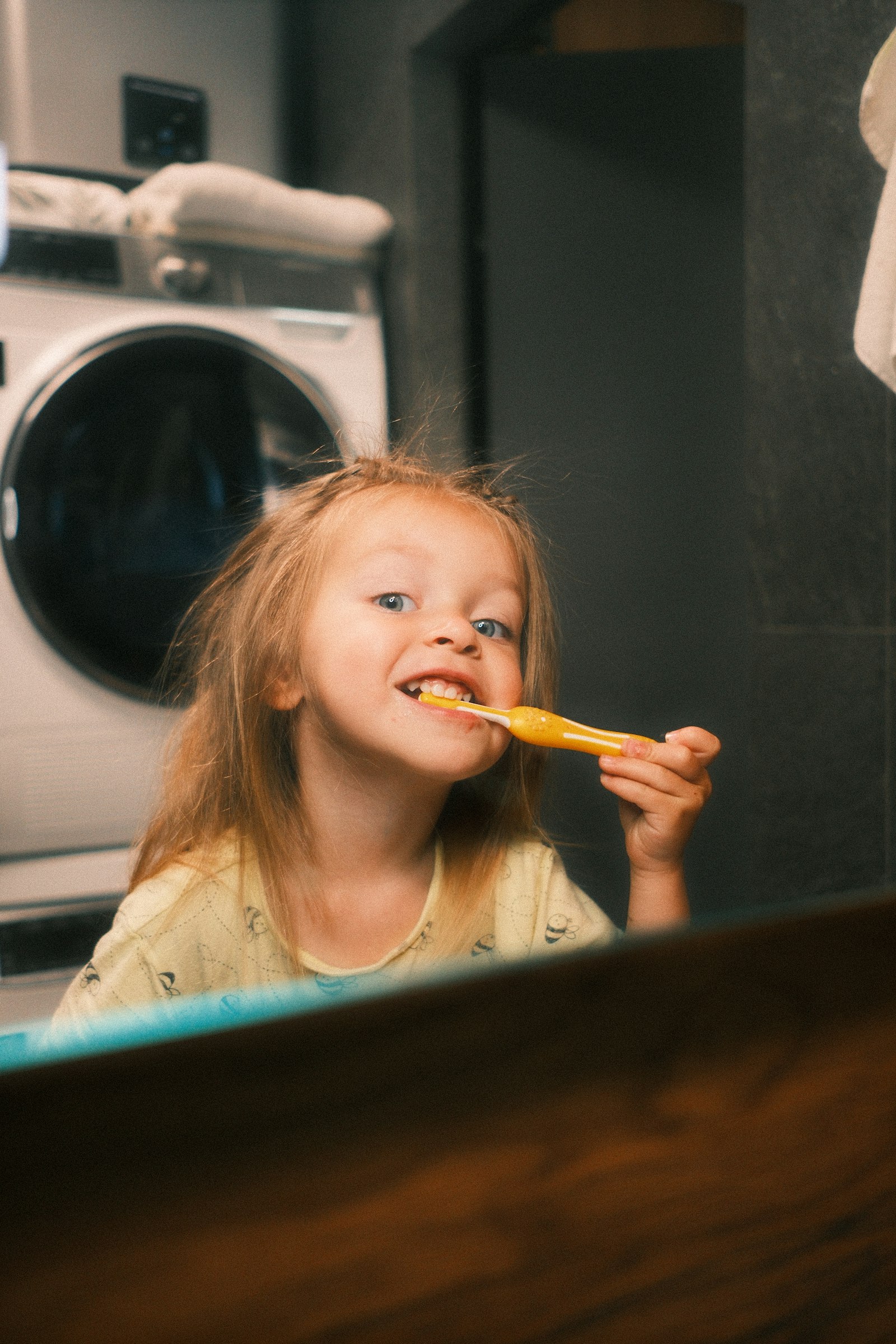
How to build routines that actually stick
Routines don’t have to be rigid schedules taped to the fridge. The best ones for little kids are simple, flexible, and easy to repeat anywhere. If you need a few small activities to build them around, this list of 50 screen-free activities for kids is a good place to start.
TRY THIS AT HOME
- Anchor to events, not the clock. “After breakfast we brush teeth” beats “8:15 we brush teeth.” Event-based routines survive real life.
- Let a song be the cue. A cleanup song, a wind-down song — when the song plays, everyone knows what’s happening. The song is the routine.
- Keep it short and portable. A three- or four-step sequence you can do at home, at Grandma’s, or in a hotel room is one that’ll actually last.
- Give a heads-up before transitions. “One more song, then we put on shoes.” A little warning turns a surprise into a countdown.
- Protect the bedtime routine. Same simple steps, same order, every night. It’s the single highest-payoff routine you have.
The gentle takeaway
When your child clings to the way things “always” go, they’re not being difficult. They’re telling you that the predictability makes them feel safe — and that safety is the ground everything else grows from.
You don’t need a perfect schedule or a color-coded chart. You just need a few small, familiar anchors your little one can count on: the same songs, the same steps, the same gentle rhythm to lean into, day after day.
References
- Spagnola, M., & Fiese, B. H. (2007). Family Routines and Rituals: A Context for Development in the Lives of Young Children. Infants & Young Children. Semantic Scholar
- Mindell, J. A., & Williamson, A. A. (2018). Benefits of a bedtime routine in young children: Sleep, development, and beyond. Sleep Medicine Reviews. PubMed 29195725
- Selman, S. B., & Dilworth-Bart, J. E. (2024). Routines and child development: A systematic review. Journal of Family Theory & Review. Wiley
Questions Parents Ask About Routines
How long does it take a new routine to stick?
Longer than most advice suggests, and it varies enormously by child. What I’d watch for isn’t compliance but recognition — the day your child starts the next step before you say anything, the routine has landed. That can be a week or it can be a month.
What happens when the routine breaks — travel, illness, a new sibling?
It survives. Routines are more robust than they feel; children usually snap back within a few days of getting home. What helps most is keeping one anchor intact while everything else moves — the same bedtime song in a strange room does a lot of work.
Is a rigid schedule the same as a routine?
No, and the difference matters. A schedule is about clock times. A routine is about order — what comes after what. Order is what a small child can actually hold onto, and it’s why “bath, then books, then song” works whether it starts at 6:40 or 7:15.
My toddler resists the routine we already have. What now?
Usually the routine is fine and the transition into it is the problem. Try giving the start a signal — the same song, every time — rather than an instruction. A predictable cue is easier to accept than a request.
Does every part of the day need a routine?
Definitely not. Pick the two or three moments that are hardest in your house and leave the rest loose. A day that’s routine from end to end is exhausting to run and doesn’t leave room for a child to make their own decisions.

— Ms. Chelsea
Written by
Ms. Chelsea
Before starting Mailbox Melodies, Chelsea created Grape Jammers Music, a music education business in Napa, California, where she still teaches toddler music classes today. She has also taught preschool, is classically trained in voice, and has over 30 years of stage experience — including professional performances at Disneyland and SeaWorld. These days she writes and records the songs, draws the zines, and packs every envelope herself, and tries it all out on her own two little ones for inspiration.
Read Chelsea’s letter →How it works
Music class, delivered to your mailbox
A song that arrives on the same day every month is its own small routine — which is part of why I ship on the 15th and never a day I feel like.
Join
Sign up in under a minute, for your family or as a gift.
Ms. Chelsea gets to work
She writes and records the month’s songs and packs every envelope herself.
Watch the mailbox
Real mail arrives with your child’s name on it. Pop in the CD and music class begins at home.
$19 a month · ships on the 15th · cancel anytime
See How It WorksScreen-free music mail for developing minds.