Before Mailbox Melodies existed, I created a toddler music class called Grape Jammers that I still teach today. Tuesday and Thursday mornings, a carpeted community room, a circle of grown-ups sitting cross-legged with small children climbing in and out of their laps. I hauled the same canvas bag to every class: egg shakers, rhythm sticks, a bin of chiffon scarves, and a hand drum with a dent in the rim from the day a two-year-old named Marcus tested it against the floor.
Parents would sometimes pull me aside afterward and ask, a little sheepishly, what they should be doing at home. And here is the thing I told them then and still believe now: everything that made that class work is something you already have in your living room. If you have been searching for music classes for toddlers and coming up short — wrong time, wrong town, wrong budget, a napper whose schedule refuses to cooperate — this article is for you.
The Secret of Good Music Classes for Toddlers (It Was Never Me)
I would like to tell you Grape Jammers works because of my training. It mostly didn’t. It worked because of three ingredients, and none of them require a teacher.
It happened at the same time, the same way, every week. We opened with the same hello song for years. Not because I lacked imagination — because toddlers walk taller inside a routine they can predict. The children who seemed to get the most from class were rarely the ones with the fanciest musical households. They were the ones who knew exactly what came next and got to be right about it, twice a week. I have written more about why that predictability matters in The Magic of Routines.
The grown-ups sang. Off-key, self-conscious, wonderful. A toddler watching a parent sing learns something no recording can teach: singing is a thing my people do, and I’m invited.
The children did the music, not just heard it. Shaking, tapping, stomping, waiting for the big “STOP!” in a freeze song. Toddlers learn music the way they learn everything — with their whole bodies.
QUICK SCIENCE: In a study at McMaster University, babies randomly assigned to active, participatory music classes — singing, moving, taking turns — showed stronger early communication and social responses than babies in classes where recorded music simply played in the background. Active seems to be the ingredient that matters, not “exposure.” (Gerry, Unrau & Trainor, 2012)
Notice what’s missing from that list: a degree, a guitar, a good singing voice. You have everything a music class needs. You just need a shape to pour it into.
How to Run a Ten-Minute Music Class in Your Living Room
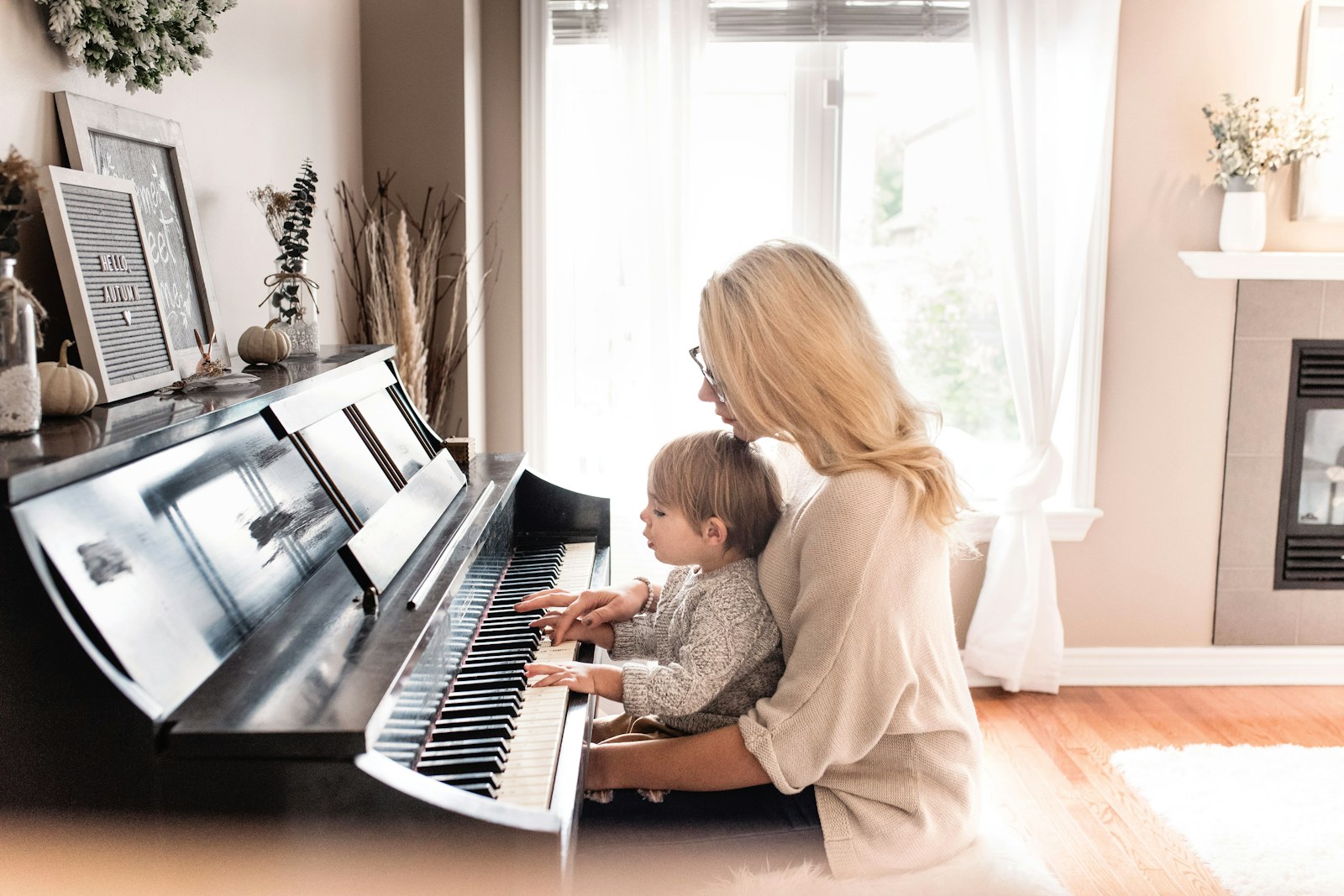
Here’s the structure I use, shrunk to home size. Ten minutes, once a day or a few times a week, anchored to something that already happens — after breakfast, before bath. The anchor matters more than the clock.
Open with the same hello song, every single time. Sing “Good Morning to You” or make up two lines to the tune of “Frère Jacques” with your child’s name in them. The name is the magic. By the second week, watch what happens when you sing the first note.
One moving song. “The Wheels on the Bus,” “Head, Shoulders, Knees and Toes,” or “Ring Around the Rosie” if you have the knees for it. Big motions, no coaching. If your toddler just watches for a while, that’s participation too — mine always joined about three weeks after their parents had given up hope.
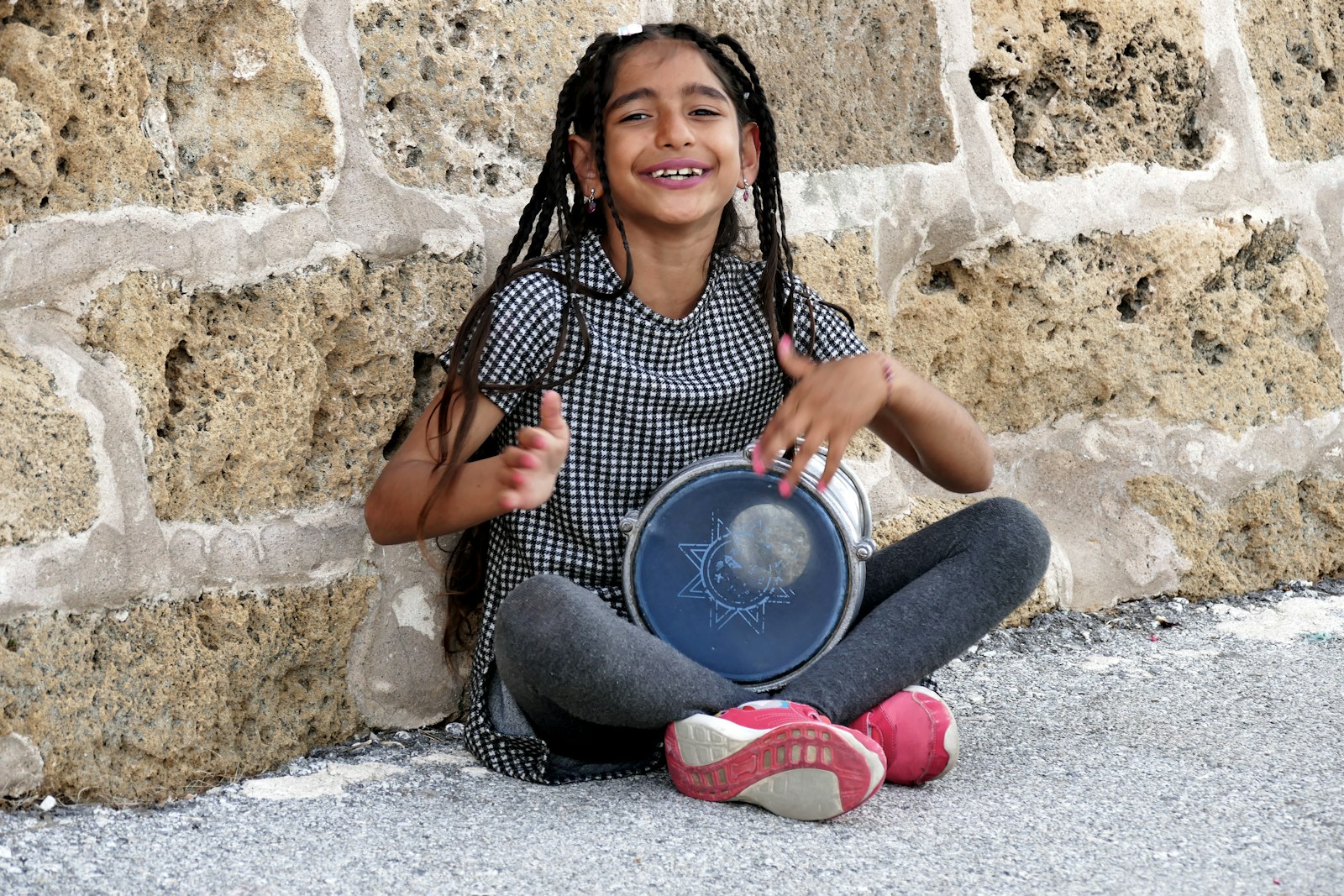
One instrument moment. A pot and a wooden spoon is a drum. Dried beans in a sealed water bottle is a shaker. Play a song and tap along, then stop the music suddenly and freeze. The shriek of delight at the freeze is, as far as I can tell, universal.
Close with the same quiet song. Something slow — “Twinkle, Twinkle” works forever. Lights the same, lap the same. This is the part parents later tell me migrated into the bedtime routine on its own.
That’s it. That’s the class. The same four beats, in the same order, until your toddler starts running the class themselves — and they will.
TRY THIS AT HOME: This week, pick your hello song and sing it at the same anchor point four days in a row. Don’t add anything else yet. By day four, most toddlers will show you they’ve been keeping track — a bounce, a hum, showing up to the spot early. That’s your class officially in session.
What You Don’t Need
I want to say this plainly, because the internet will happily sell you the opposite: you don’t need a curriculum, a set of Montessori-labeled instruments, perfect pitch, or a printable schedule. You don’t need to feel guilty that you’re not doing it daily, and a missed week doesn’t undo anything. Toddler music runs on repetition and warmth, and you cannot buy either one. If you sang the same three songs on a loop for a month, you would not be doing it wrong — you’d be doing it exactly right, and here’s why the hundredth repeat is a feature, not a bug.
When an In-Person Music Class for Toddlers Is Worth It
Honesty from a music class teacher: sometimes the class isn’t really for the child. It’s for the parent — the reason to leave the house, the other adults, the coffee after. Those are real needs and a living room can’t meet them. If there’s a class nearby that gets you out the door on a hard morning, take it and don’t look back. What I want you to let go of is the worry that skipping the class means your child is missing the music. The research on shared music at home suggests the opposite: it’s the singing-together part, wherever it happens, that’s associated with the good outcomes (Williams et al., 2015).
How Mailbox Melodies Fits In
I started Mailbox Melodies because I kept meeting parents who wanted the class but couldn’t get to it. So I turned the class into mail. Each month’s envelope ships on the 15th with a CD of songs, a booklet with the movement games and lyrics, stickers, sometimes a small craft, and a download code for the tracks. It’s $19 a month, it’s made for ages 0 to 6+, and it’s built around exactly the structure above — songs to open, songs to move to, a quiet song to land on.
THE MAILBOX MELODIES METHOD: Every month’s collection is sequenced the way I sequence a class: a hello, a stretch of big movement, an instrument game, and a wind-down. You don’t have to plan anything — the track order is the lesson plan.
If you want the deeper background on toddlers and music first, start with my complete guide to music for toddlers.
References
- Gerry, D., Unrau, A., & Trainor, L. J. (2012). Active music classes in infancy enhance musical, communicative and social development. Developmental Science. Link
- Williams, K. E., Barrett, M. S., Welch, G. F., Abad, V., & Broughton, M. (2015). Associations between early shared music activities in the home and later child outcomes. Early Childhood Research Quarterly. Link
- Zhao, T. C., & Kuhl, P. K. (2016). Musical intervention enhances infants’ neural processing of temporal structure in music and speech. PNAS. Link
Questions Parents Ask Me About Home Music Classes
My toddler won’t sit still for any of it. Is it working?
Yes. Wandering toddlers are listening toddlers. In Grape Jammers, the child orbiting the room during the whole class was often the one singing every word in the car afterward. Keep going; don’t chase.
I can’t sing. Won’t I teach them wrong notes?
Your voice is your toddler’s favorite sound on earth, wrong notes included. Pitch accuracy develops over years of hearing and trying — what they need from you is the invitation, not the intonation.
How long should a session be?
Ten minutes is plenty. Ending while it’s still fun is what makes them ask for it tomorrow. Think dessert after dinner, not the whole buffet.
What’s the right age to start?
There isn’t a too-early. Babies get sung to on laps; six-year-olds run the freeze game. The structure stretches with them.
Do I need real instruments?
No. Pots, spoons, sealed bottles of beans, and hands work beautifully. If you add anything, add one shaker per person — turn-taking with instruments is half the curriculum.

— Ms. Chelsea
Written by
Ms. Chelsea
Before starting Mailbox Melodies, Chelsea created Grape Jammers Music, a music education business in Napa, California, where she still teaches toddler music classes today. She has also taught preschool, is classically trained in voice, and has over 30 years of stage experience — including professional performances at Disneyland and SeaWorld. These days she writes and records the songs, draws the zines, and packs every envelope herself, and tries it all out on her own two little ones for inspiration.
Read Chelsea’s letter →How it works
Music class, delivered to your mailbox
Everything in this article is the shape of one of my own classes — and it is what I sequence into the envelope every month.
Join
Sign up in under a minute, for your family or as a gift.
Ms. Chelsea gets to work
She writes and records the month’s songs and packs every envelope herself.
Watch the mailbox
Real mail arrives with your child’s name on it. Pop in the CD and music class begins at home.
$19 a month · ships on the 15th · cancel anytime
See How It WorksScreen-free music mail for developing minds.